How managers can point people to the employee EAP program
Managers are often the first to notice when someone is having a hard time. This guide covers how to raise your employee EAP program in a way that feels supportive, and how to respect privacy afterwards. Beny sits alongside it, helping your team with everyday costs.
An employee assistance program (EAP) is a confidential support service your organisation arranges with an outside provider. Employees can speak with a qualified counsellor about personal or work issues for a short run of sessions, and many programs extend that to immediate family. The employer pays for it, and the provider keeps what is said private.
Signs a manager might notice that suggest the EAP could help:
A reliable person starts missing deadlines
Withdrawal or a short fuse in meetings
More sick days than usual
Mentions of trouble at home
Worry about rent, bills or debt
None of these mean something is wrong, and a manager is not there to diagnose. They are a prompt to check in, kindly and in private.
The manager's part
Why your conversation matters
Most people hear about the EAP once, at induction, and then forget it. A manager who mentions it at the right moment, in plain words, can be what turns a hard week into a phone call for help.
A good check-in usually looks like this:
Find a private moment and ask an open question, such as how things have been lately
Listen more than you talk, and resist fixing everything on the spot
Mention the EAP as one option, with the number or booking link ready to share
Leave the choice with them, and follow up later on work matters only
If someone is in immediate danger, call 000. For everything else, ask whether your provider offers advice for managers, so you can plan the conversation before you have it.
Respecting privacy after you suggest it
Confidentiality is what makes people willing to call. Sessions stay between the employee and the counsellor, so a manager should never ask whether someone went. Your job is to keep the door open and adjust workload where that is reasonable.
Beny is not an EAP: it does not offer counselling, assessments or crisis support. It is an employee benefits and recognition app that helps with everyday costs, which are a common reason people feel stretched.
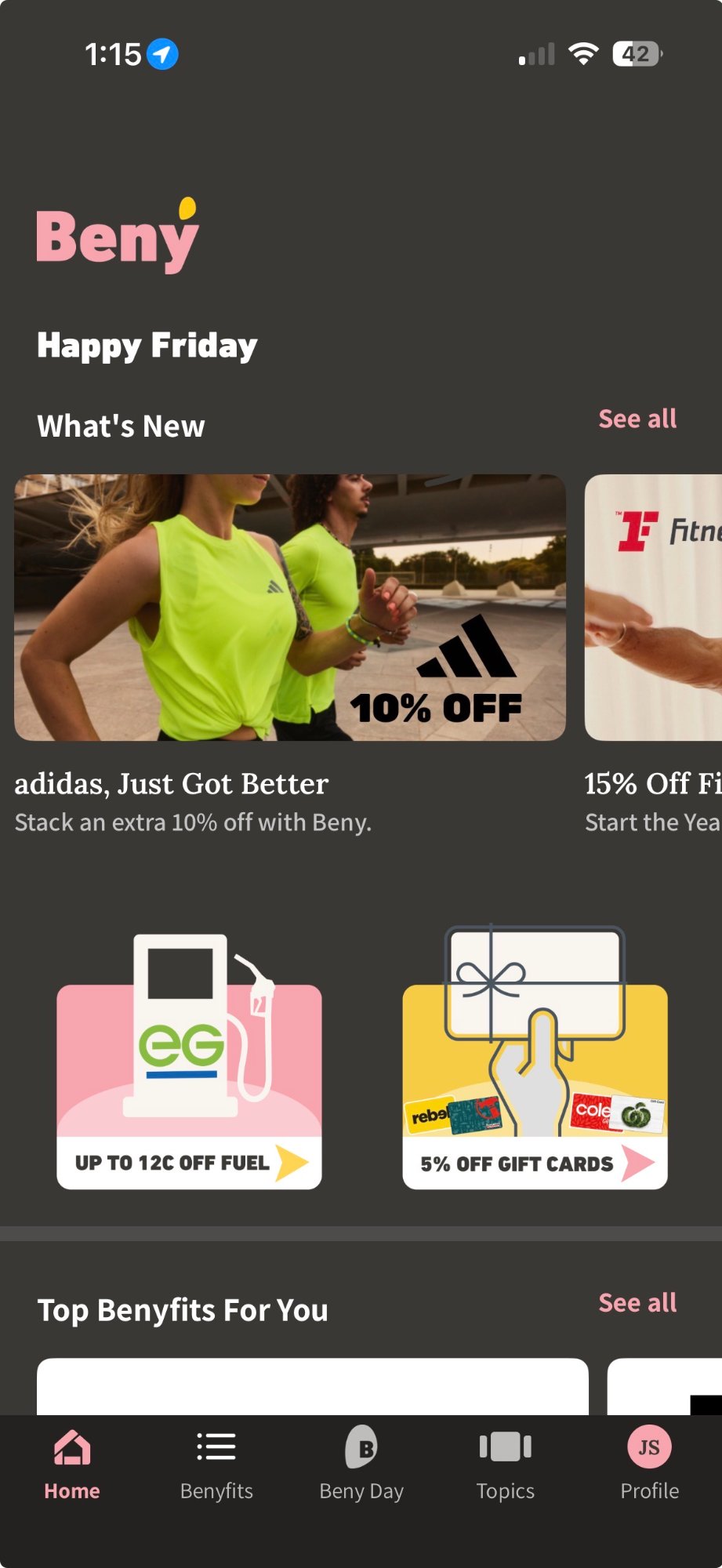
Up to 12c/L off every tank of fuel
A 5% saving on the Woolworths or Coles shop, paid with in-app eGift cards
Cheaper cinema nights with 35% off movie vouchers, plus 5% off eGift cards
Travel, home loan and insurance benefits, with offers from 400+ Australian brands
Beny gives managers simple ways to show people they are noticed, and a channel for keeping the EAP in view without singling anyone out.
What you can do with Beny:
Send bulk gift cards to thank a team after a tough stretch
Post in-app messages in your organisation's voice
Send a regular note with your EAP's phone number
See sign-ups and usage with real-time engagement tracking
Let each employee add up to two friends or family members
Getting started
Ready for your team in under 8 minutes
Sign up your organisation, upload your logo and Beny generates your unique QR code. Share it by email, on the intranet or on a poster in the lunchroom. Employees scan it, get an SMS and download the app, with no IT, no integrations and no IT set-up fee.
Usually not. Suggesting the EAP is a private conversation, and the employee decides whether to use it. If there is a safety risk or a matter HR must handle, follow your organisation's policy and tell the employee what you are doing.
No. Sessions are confidential between the employee and the provider, and providers do not pass names to the employer. If the employee chooses to tell you, treat it as private and do not repeat it.
Keep it short and kind, for example: "It sounds like a lot is going on. We have a confidential support line you can call, and here is the number." Then leave the choice with them. Check in again later about how work is going, not about the EAP.
In most programs, yes: managers are eligible like any other employee. Many providers also give people leaders advice on handling a hard conversation or a team issue. Check what your contract includes and tell your managers about it.
Formal training helps but you do not need to wait for it. Give managers the EAP contact details, a short script and a clear rule about privacy. Many providers run short sessions for people leaders, so ask yours what is on offer.
Give your managers more ways to help
Your EAP covers confidential support. Beny covers everyday savings and recognition. With both in place, a manager has more than one way to help when someone on the team is doing it tough.